

The sophisticated traveler knows that the year after a global spectacle is rarely a period of exhaustion; it is a period of inheritance. Many observers fear they “missed the boat” by bypassing the 2025 World Expo in Osaka, assuming the momentum would dissipate once the pavilions closed. As a travel strategist, I argue the opposite: 2026 represents a rare alignment of logistics and economics that makes it the superior window for a Japanese immersion.
We are entering a post-event vacuum where the “event-year premium” on hotels and flights has evaporated, yet the multi-billion-yen infrastructure remains. This is “Next-Generation” Japan — a country that has spent years gearing up for the world and is now ready to host you without the logistical friction of thirty million extra visitors. It is a “perfect storm” composed of a legacy of infrastructure, a wave of world-first openings, and a currency window that analysts suggest is nearing its close.
In 2025, Japan was a stage for the world. In 2026, Japan is a playground for the individual. Here is why this transition year is the most strategic time to book your return.
1. Inherit the Legacy, Avoid the Friction
The 2025 Expo served as a catalyst for a massive injection of capital into the Kansai region. By 2026, the construction dust has settled, and visitors can reap the rewards of these investments without the crowd-control fencing or multi-hour queues of the fair itself.
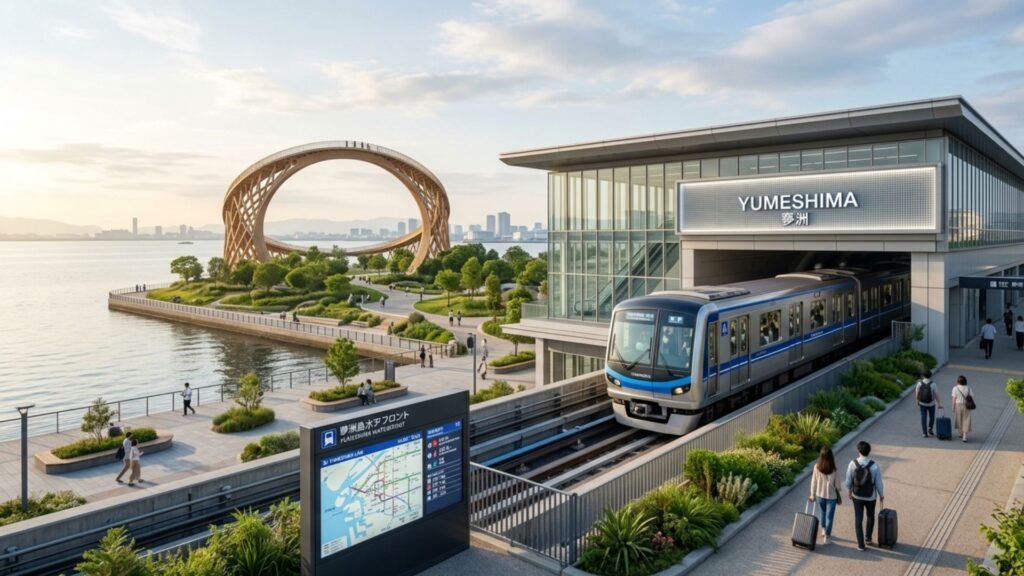
Key infrastructure dividends for 2026 travelers include:
- The Yumeshima Connectivity: The 3.2 km extension of the Osaka Metro Chūō Line to the brand-new Yumeshima Station is now a permanent fixture, providing seamless 30-minute access from central Osaka to the waterfront.
- Sustainability as Landmark: While the Expo’s temporary structures are gone, a 200-meter section of Sou Fujimoto’s iconic Grand Ring remains as a memorial park. In a testament to Japanese “experience design,” the rest of the timber has been repurposed for public housing and reconstruction projects, tying your visit to a larger narrative of sustainability.
- The “Battle-Tested” Workforce: After managing tens of millions of visitors, the hospitality sector in Osaka and Kyoto is operating at peak efficiency. From AI-driven digital signage to a workforce now fluent in high-volume, multilingual service, the “travel friction” that often plagues international trips has been systematically engineered out of the experience.
This evolution has effectively cemented Osaka as Japan’s “second capital,” offering a high-tech, refreshed urban landscape that serves as a sophisticated, more affordable alternative to Tokyo.
2. The Year of the “Reboot”: New-Generation Openings
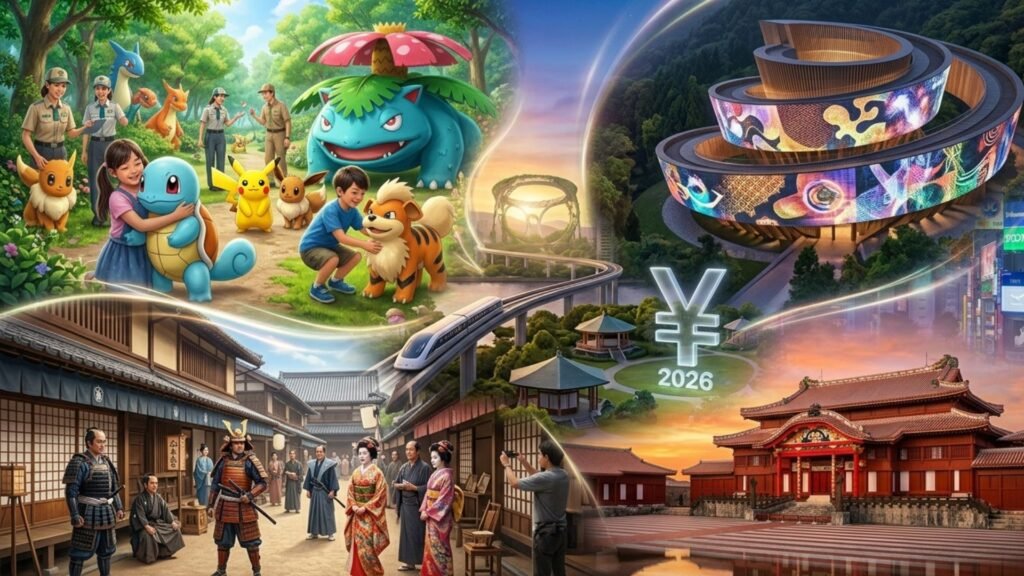
Far from a fallow year, 2026 is the debut year for landmarks that redefine the Japanese “checklist.” The focus has moved beyond mere sightseeing toward immersive, narrative-driven environments.
| Attraction | Location | Why It’s a 2026 Game-Changer |
| PokéPark Kanto | Tokyo (Yomiuriland) | The first permanent outdoor Pokémon park (Opening Feb 5, 2026). A 26,000 m² zone featuring over 600 species in “the wild.” |
| MoN Takanawa | Tokyo | The Kengo Kuma-designed “Museum of Narratives” (Opening March 28, 2026). A spiral landmark blending heritage with digital art. |
| Uzumasa Kyoto Village | Kyoto | A major expansion of Toei Kyoto Studio Park (Opening March 2026) for immersive Edo-period samurai roleplay and movie-magic. |
| Shuri Castle | Okinawa | The completion of the Seiden (Main Palace) reconstruction, the emotional and architectural heart of the Ryukyu Kingdom. |
Evidence of this “reboot” is everywhere: the final phases of Ghibli Park — specifically the Mononoke Village and Witch’s Valley — are now fully operational, while the permanent teamLab Biovortex in Kyoto offers a nature-inspired digital ecosystem. These are not just attractions; they are evidence that 2026 is the year Japan becomes a country-sized theme park for culture and technology.
3. The Last “Super-Cheap” Window
Economically, 2026 represents a “Buyer’s Market” that is unlikely to persist. The yen remains at historic lows, trading in the mid-¥150s against the dollar. This creates a staggering purchasing power advantage: a high-quality meal that once cost $15 now effectively costs $10, and luxury hotels that were $150 are now accessible at $100.
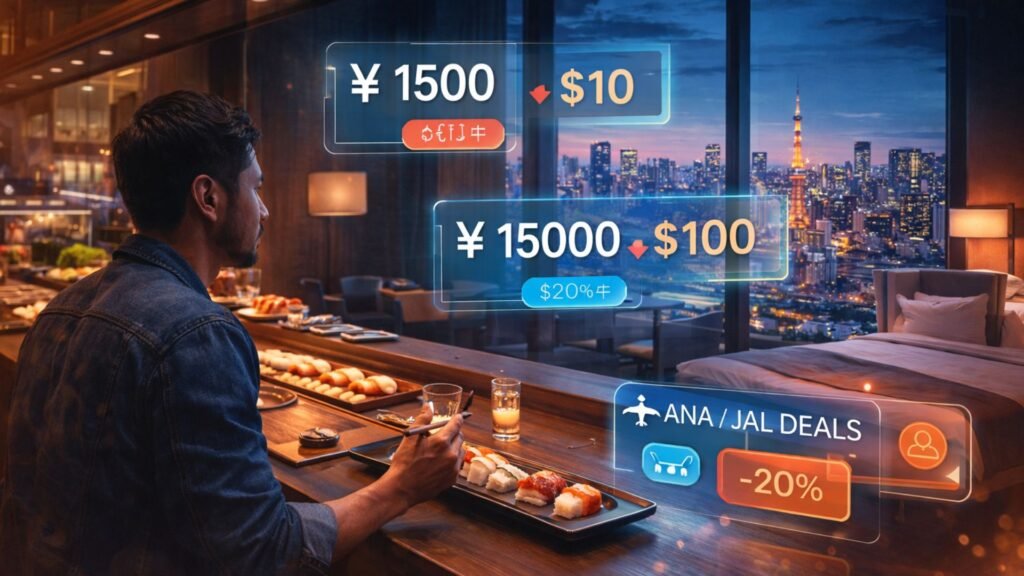
To maintain post-Expo momentum, the industry is offering unprecedented value:
- ANA/JNTO Promotion: International visitors can secure two free domestic flight segments (though you must still cover taxes and fees), making a side trip to Hokkaido or Okinawa nearly frictionless.
- JAL Vacation Bundles: Japan Airlines has released comprehensive 2026 packages that bundle flights and premium accommodations at rates significantly lower than a-la-carte booking.
Strategic travelers should take note: analysts from Nomura and Intesa Sanpaolo forecast a gradual strengthening of the yen toward the mid-¥140s by late 2026 or early 2027. Delaying your trip means voluntarily surrendering a 10–20% currency discount.
My 2026 Japan Budget Defense Toolkit
4. The Crowd Paradox: Smart City Solutions
While global interest in Japan is at an all-time high, 2026 will likely feel more spacious. JTB forecasts an inbound dip of 3–5% (to roughly 41 million), largely driven by a projected 45% decrease in Chinese tour groups due to shifting diplomatic and economic currents.
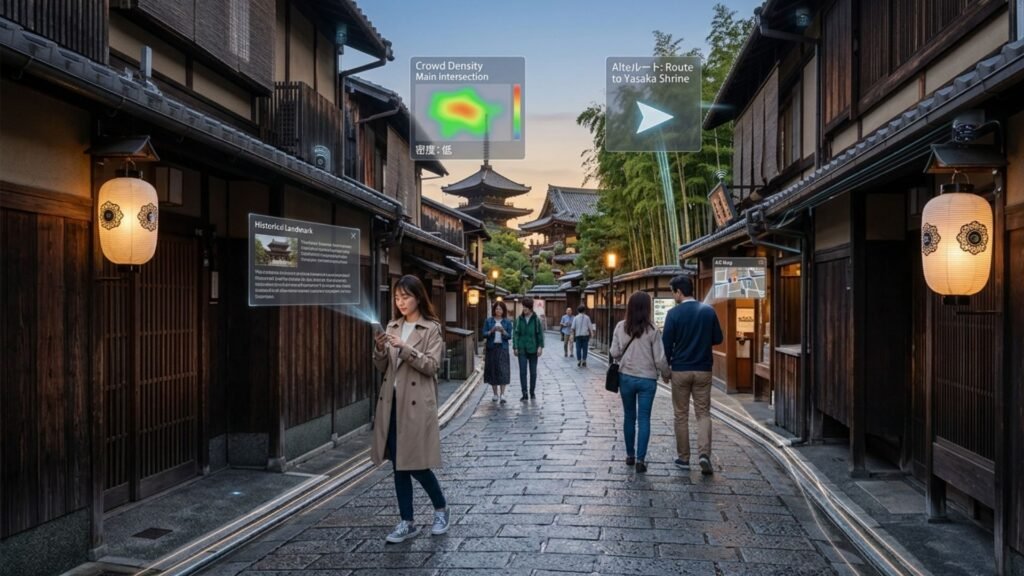
More importantly, 2026 is the year Japan’s pivot to “Active Management” becomes fully realized through Smart City Tech. Rather than just “more tourists,” Japan is pursuing “better-managed tourists” via:
- AI-Driven Congestion Apps: Real-time sensors at hotspots like Kyoto’s Gion now push alerts to your smartphone, suggesting alternative, lesser-known gems when density peaks.
- Timed Entry and Caps: From the Arashiyama Bamboo Grove to the daily hiker limits and conservation fees on Mt. Fuji, the “overtourism” of 2024–2025 is being architected out of existence.
5. The “Transition Year” Grace Period
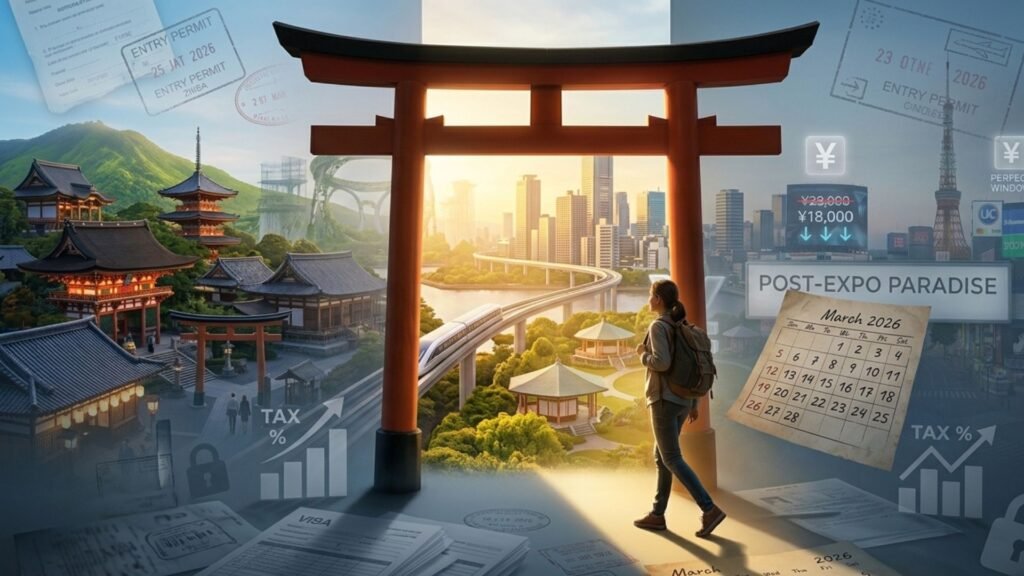
2026 is the final “frictionless” window before Japan implements more rigorous administrative layers. As a strategist, I advise booking before the following “red tape” and price adjustments take full effect:
- The Regulatory Horizon: A Schengen/ESTA-style pre-clearance system for visa-exempt visitors and a major tax-free shopping overhaul (moving to a “refund-at-airport” model) are both targeted for late 2026–2028 rollouts.
- The Kyoto Tax Hike: Starting March 1, 2026, Kyoto will implement a significant accommodation tax increase, scaling up to a staggering ¥10,000 per person per night for ultra-luxury stays. Early 2026 travelers can bypass the brunt of this financial layer.
- The Dual-Pricing Trend: We are seeing a national movement toward “dual pricing,” where foreign visitors may pay 30–100% more for entry to certain overstressed heritage sites. 2026 is the final year before this likely becomes a nationwide standard.
Final Thought: The Opportunity Cost of Waiting
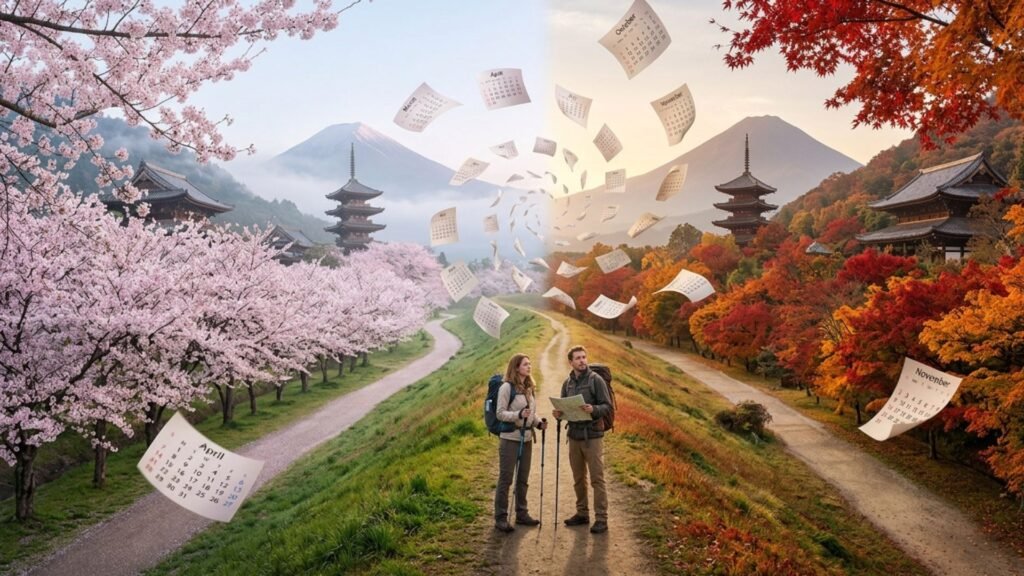
For those planning a 2026 journey, the “sweet spot” within the sweet spot is Spring (mainly late March through May) for the sakura or Autumn (October/November) for the foliage. If you are a sports enthusiast, the Aichi-Nagoya Asian Games in September 2026 offers a major cultural bonus, though it serves as a “watch-out” for localized crowding in the Chubu region.
Ultimately, the choice for 2026 is a calculation of value against regulation. Do you wait until 2028, when the infrastructure is even more mature but the yen is stronger and the red tape is thicker? Or do you seize the 2026 “Transition Year,” reaping the legacy of the Expo while enjoying a 20-30% currency discount?If history is any guide, the “perfect storm” of 2026 will not wait for the undecided. The question is no longer if you should go, but whether you can afford to miss this specific window of access.
